Spring Car Care Checklist: Get Your Vehicle Ready for the Season After months of freezing temperatures, road salt, and pothole-filled streets, Midwest winters take a serious toll on your vehicle. Dealing with …
Quality, Reliable Service. Guaranteed
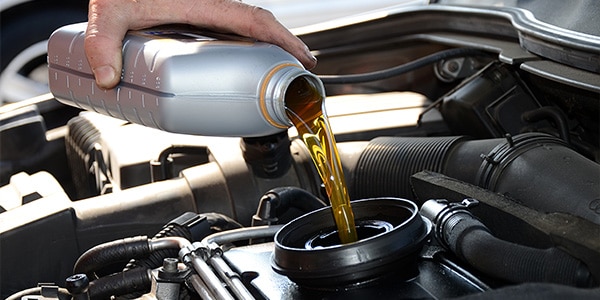
Oil is the lifeblood of your engine. It lubricates moving parts, reduces friction, helps dissipate heat, and keeps internal components clean. Over time, oil breaks down and becomes contaminated with metal particles, dirt, and combustion byproducts – losing its ability to do those jobs effectively.
At Car-X Tire & Auto, our Professional, Trained Technicians make oil changes fast, thorough, and hassle-free. We’ll only use the correct oil type for your vehicle and driving habits, and remind you when your next change is due.
Enter your information below to find the right Car-X store for services, tires, coupons and more!
OR
Coupons can be viewed after store selection.
Best for: Older vehicles, low-mileage drivers, and engines with simple mechanical designs.
Conventional oil is refined directly from crude petroleum. While it gets the job done in the right application, the refining process leaves behind impurities and produces molecules that vary in size and shape – think of it like a handful of rocks. Those irregular molecules mean conventional oil breaks down faster under heat and stress, especially in modern, high-performance engines.
Conventional oil is typically the most affordable option and works well in older vehicles or engines that were designed around it. If your owner’s manual specifies conventional oil, that’s what we’ll use.
Best for: Drivers who want better protection than conventional without the full cost of synthetic.
A synthetic blend mixes conventional base oil with synthetic oil to offer improved performance at a mid-range price point. You get better resistance to thermal breakdown than straight conventional, along with improved performance in temperature extremes – without paying full synthetic pricing.
A good middle-ground option if your driving involves occasional towing, stop-and-go city traffic, or temperature swings, but your vehicle doesn’t require full synthetic.
Best for: Most modern vehicles, turbocharged engines, and high-demand driving conditions.
Full synthetic oil goes through an advanced chemical engineering process that removes far more impurities than conventional refining and produces molecules that are uniform in size and shape – think marbles instead of rocks. That uniformity means better lubrication, better heat resistance, and better performance under the extreme conditions that modern engines create.
Most modern vehicles are engineered specifically for full synthetic oil – and for good reason. Today’s engine timing systems use oil flow and pressure to control tensioners and actuators. Using the wrong oil in these systems isn’t just a performance issue, it’s a maintenance risk. Full synthetic is also the right choice for turbocharged engines, which run hotter and put more stress on oil than naturally aspirated engines.
Full synthetic typically allows for longer service intervals than conventional oil, though we still recommend following your owner’s manual as the maximum mileage guideline.
Not sure which oil your car needs? The correct oil type and viscosity for your vehicle is listed in your owner’s manual and is often printed on the oil filler cap. Your Car-X technician will verify the right grade before every service – you don’t need to know it in advance.
The old “every 3,000 miles” rule is outdated for most modern vehicles. Today’s engine oil quality standards allow for longer service intervals. But how long is too long, depends on your vehicle, the oil type, and your driving conditions. Many newer vehicles have an oil life monitoring system that calculates change intervals based on actual driving conditions – not just mileage.
We recommend using the service interval listed in your owner’s manual as the absolute maximum mileage guideline.
Most automotive repair industry thought leaders — the people actually repairing engines — are revising their recommended oil change intervals down by as much as half, based on oil-related failure rates in modern engines. Two reasons why more frequent changes make sense:
Car-X recommends getting new tires every 30,000 or 40,000 miles. If your tire tread is at 4/32 of an inch, it is a good time to consider getting new tires. Anything less and the tire is considered “bald,” and legally worn out in most states.
Spring Car Care Checklist: Get Your Vehicle Ready for the Season After months of freezing temperatures, road salt, and pothole-filled streets, Midwest winters take a serious toll on your vehicle. Dealing with …

What Happens If You Delay an Oil Change? Oil is the lifeblood of your engine. Ignoring it can turn a small maintenance task into a massive repair bill. Protect Your Engine Today. …

There’s nothing worse than realizing your steering wheel isn’t turning right or is simply not turning at all. When these issues arise, it’s important to remember that there is usually a simple …

Ultimate Guide to Car and Vehicle Alignment Why keeping your wheels straight is the secret to safety, fuel economy, and tire longevity. Tires wearing unevenly? Get a precision alignment check to …

Planning a Summer Road Trip? Don’t Overlook Your A/C System For many people, a significant part of summer is embarking on road trips- whether to a neighboring state or (for the hardcore …

Are you ready for the Summer? Long drives, high temperatures, and extra mileage can push your vehicle to its limits. Let the ASE Certified Techs at Car-X Tire & Auto make sure your vehicle …
Spring Car Care Checklist: Get Your Vehicle Ready for the Season After months of freezing temperatures, road salt, and pothole-filled streets, Midwest winters take a serious toll on your vehicle. Dealing with …
© 2025 Car-X Inc. All Rights Reserved